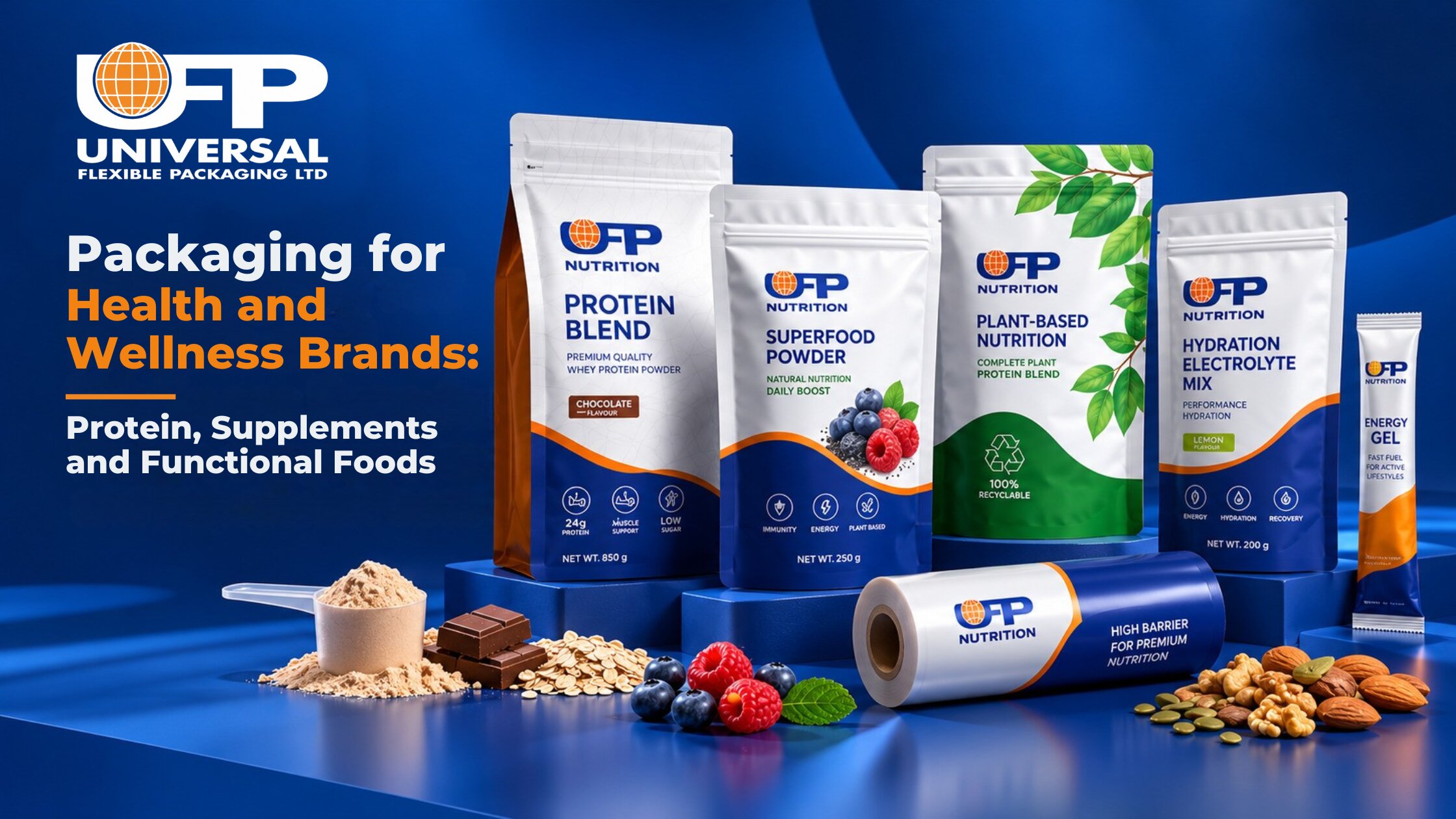
A protein powder used every morning places different demands on its packaging from a bar eaten on the go. Powders need protection from moisture and a closure that works with repeated use, while individually wrapped snacks need seals that hold throughout distribution.
Food supplements bring additional considerations around ingredient stability and labelling. For brands developing these products, the packaging format must suit the contents, filling process and intended shelf life.
Protein powders are commonly packed in rigid tubs or resealable pouches with suitable moisture protection. Single-serving powders can use sachets, while protein bars and functional snacks are often packed in flow wrap or flexible pouches. The best format depends on the product's ingredients, sensitivity to moisture and oxygen, pack size and how it will be used. Food-contact suitability, sealing performance and applicable labelling requirements should be confirmed before production.
What packaging is best for protein powder and health food products?
Choosing packaging for a health and wellness product begins with understanding its physical characteristics and how customers will use it.
A powdered drink mix needs a pack that protects the contents from humidity and allows the customer to dispense the intended quantity.
An individually wrapped protein bar needs a suitable seal and enough protection to withstand storage, transportation and retail handling.
Products intended for repeated use also need closures that remain practical throughout the period after opening.
Common packaging options include:
- Resealable stand-up pouches for suitable powders and dry mixes
- Flexible sachets for individual portions
- Flow wrap for protein bars and functional snacks
- Printed flexible films for automated packing equipment
- Barrier laminates for products requiring additional protection
- Rigid tubs or containers where the product and consumer use call for that format
The packaging format also needs to accommodate the required product information, branding and handling requirements.
For food supplements, the product's legal classification and associated labelling obligations should be established before the final artwork is approved.
What packaging is suitable for protein powders?
Protein powders are often supplied in larger quantities and used repeatedly after the pack has been opened.
Packaging needs to protect the powder during storage while allowing customers to access and close the pack conveniently.
Moisture protection is particularly important because some powdered ingredients can absorb water from the surrounding environment. This can cause clumping, affect powder flow and change the product's texture.
Resealable stand-up pouches can be suitable for powdered products where the film structure provides appropriate protection and the closure works with the powder being packed.
When specifying packaging for protein powder, brands should consider:
- Moisture barrier performance
- The required pack size and fill weight
- Resistance to punctures and handling damage
- The type and performance of the resealable closure
- The opening size and ease of dispensing
- Compatibility with filling and sealing equipment
- Protection during transportation and storage
Fine powders can collect around a closure or sealing area. The packaging design and filling process should account for this, particularly where powder contamination could affect the quality of the seal.
A resealable closure allows a pack to be closed between uses, although its effectiveness depends on the closure design, product residue and how consistently the customer reseals it.
The unopened pack's barrier performance and the protection available after opening should be considered separately.
Products containing sensitive fats, flavours or other ingredients may also need additional oxygen or light protection.
How should food supplements be packaged?
Food supplements can be supplied as powders, granules, tablets, capsules or other forms.
The packaging specification depends on the ingredients, product form and conditions in which the supplement will be stored and used.
For dry powdered supplements, flexible pouches and sachets can provide suitable formats where the selected materials offer adequate protection.
Individual sachets can be used for measured portions, while larger resealable packs may be appropriate for products accessed repeatedly.
Tablets and capsules can have different stability and packaging requirements, including protection from moisture, light or oxygen. Their packaging should be selected using product-specific stability information.
Packaging decisions should account for:
- Ingredient sensitivity
- Moisture and oxygen exposure
- Pack size and intended period of use
- Closure integrity
- Storage instructions
- Labelling space and readability
- Product stability and shelf-life evidence
Food supplement labelling
Food supplements sold in Great Britain must meet the applicable general food labelling rules and additional supplement-specific requirements.
These include identifying the product as a food supplement, declaring relevant nutrients or other substances, stating the recommended daily portion and displaying prescribed warnings.
The required warnings include advice against exceeding the recommended daily intake, keeping the product out of young children's reach and using supplements as a substitute for a varied diet.
Brands should confirm the legal classification of their product and the requirements that apply in each market where it will be sold.
What packaging works for functional foods and healthy snacks?
Functional foods can include products such as protein bars, fortified snacks, powdered drink mixes and other foods developed around particular ingredients or nutritional characteristics.
Their packaging needs depend on the product's texture, composition and intended use.
Protein bars and snack bars
Flow wrap is commonly used for individually packaged bars.
The wrapper needs to seal consistently and withstand handling throughout distribution.
Bars containing fats, nuts or sensitive flavour ingredients may also require materials that help limit oxidation during storage.
Powdered drink mixes
Dry drink mixes can be supplied in individual portions or larger packs intended for repeated use.
Products containing ingredients that absorb moisture need packaging that helps limit clumping and changes in powder flow.
The filling process must also be suitable for the powder's characteristics, particularly where fine particles could affect sealing.
Functional snacks
Flexible packaging can be used for suitable protein snacks, dried fruit mixes and other ambient, shelf-stable foods.
For products that are consumed over several occasions, a resealable format can be useful.
Products with a delicate structure may need additional support or packaging dimensions that reduce the risk of crushing during transportation.
Which packaging features matter for health and wellness products?
The usability of packaging becomes particularly relevant for products that customers open frequently or carry between home, work and other activities.
A larger protein powder pouch may be opened every day, while a single-serving supplement sachet is opened once.
These differences influence the packaging specification.
Resealable closures
Zips and other resealable features can make suitable pouches easier to use over several occasions.
The closure needs to function with the product being packed, particularly where powders or granules could interfere with its operation.
Sealing and pack strength
Packaging needs to withstand filling, storage and distribution without damage that compromises the finished pack.
For powdered products, the filling equipment and seal design need to minimise the risk of product residue entering the sealing area.
Pack dimensions and portion size
The correct dimensions depend on fill weight, product density and the space needed for sealing and closures.
A lightweight powder with a low bulk density can require a larger pack than a denser product supplied at the same weight.
Ease of dispensing
The opening should allow customers to access the product without unnecessary spillage.
This is particularly relevant for larger powder packs used with measuring scoops.
Printing and presentation
Printed packaging provides space for product information, usage instructions and branding.
The design must leave sufficient room for mandatory labelling and any approved nutrition or health claims.
What should health and wellness brands check before choosing packaging?
Before ordering custom packaging, brands should confirm the information needed to establish a suitable material and format specification.
This is especially important when developing products containing multiple ingredients or powders with particular handling characteristics.
A packaging brief should cover:
- The product's ingredients and physical form
- Whether it is legally classified as a food or food supplement
- Pack size and target fill weight
- Sensitivity to moisture, oxygen and light
- Intended shelf life and storage conditions
- Whether the customer will open the pack repeatedly
- The required sealing and closure features
- Compatibility with packing equipment
- Applicable food-contact material requirements
- Mandatory labelling, allergens and relevant nutrition or health claims
- The intended distribution and retail environment
For powdered products, bulk density and flow characteristics can affect the required pack dimensions and filling process.
Brands should confirm that the selected materials are suitable for contact with the intended food under the expected conditions of use.
The stated shelf life should be supported by suitable product-specific stability or shelf-life evidence, using the proposed packaging and intended storage conditions.
Packaging material specifications alone cannot establish how long the finished product will remain suitable for sale or consumption.
Nutrition and health claims
In Great Britain, nutrition and health claims must comply with the applicable rules and the Great Britain Nutrition and Health Claims Register.
Different regulatory arrangements apply in Northern Ireland, where the relevant EU framework continues to apply.
The responsible food business should review the wording and supporting evidence for any claims before approving the printed packaging.
How does UFP support health and wellness packaging projects?
Universal Flexible Packaging (UFP) supplies flexible packaging for food brands, including businesses developing functional foods, snacks and other ambient products.
The company provides printed films on rolls, stand-up pouches and barrier film options, alongside flexographic and rotogravure printing.
UFP also offers packaging design and technical development support, allowing customers to discuss material selection, pack dimensions and printing requirements during product development.
UFP's contract packing operation specialises in suitable low-risk, ambient, free-flowing products using vertical form-fill-seal equipment or ready-made pouches.
Product suitability needs to be confirmed before a packing project is agreed, particularly for powders with specific flow, handling or sealing requirements.
The company also provides storage and delivery services from its Leicester operation.
Developing packaging for a protein powder, supplement or functional food?
Speak to the UFP team about suitable flexible packaging formats, material specifications and production requirements for your product.