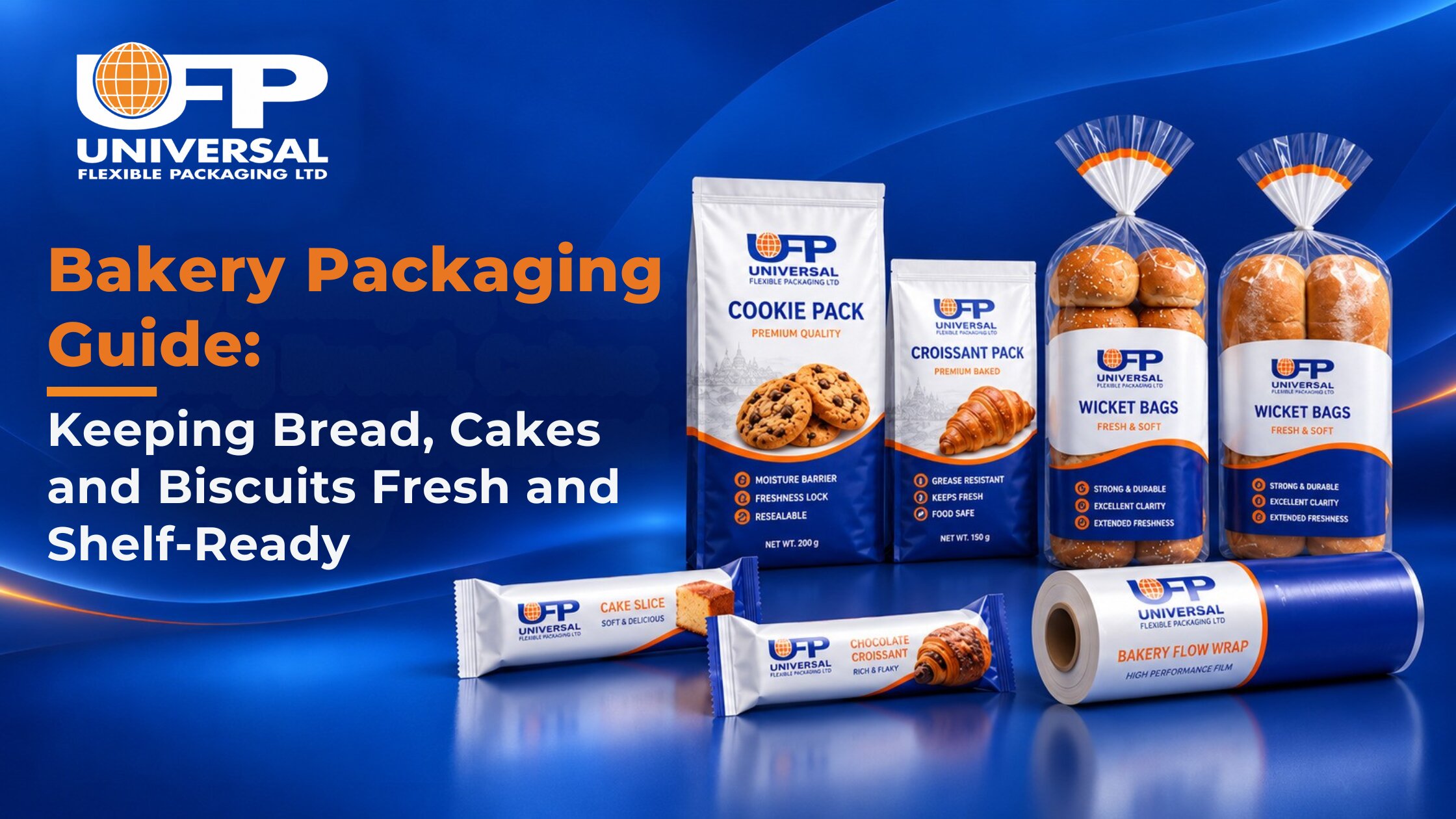
Bread, cakes and biscuits respond differently to moisture, oxygen and handling, which affects how they need to be packaged. A soft loaf needs protection against moisture loss, while a crisp biscuit can lose its texture when moisture enters the pack.
For bakery brands supplying retailers, the packaging also needs to withstand filling, sealing, transportation and shelf handling. The material and format should be selected around the product and its intended shelf life.
The best packaging for bakery products depends on the product's texture, moisture content, storage conditions and intended shelf life. Soft bread commonly uses moisture-retaining flexible bags, while crusty bread can benefit from packaging that allows moisture to escape. Cakes need suitable moisture and physical protection, while biscuits and cookies benefit from moisture-resistant films that help preserve crispness. Common formats include flexible bags, flow wrap, printed films, pouches and tray-and-film combinations. The appropriate choice depends on the product and packing process.
What packaging is best for bakery products?
Bakery products require packaging that accounts for their texture, moisture content and sensitivity to environmental conditions.
Soft bread needs to retain enough moisture to maintain its intended texture, while biscuits and crackers need protection against moisture entering the pack.
Cakes and other soft bakery products can require additional consideration around physical protection, particularly when they contain delicate toppings or fillings.
Common packaging options include:
- Flexible plastic bags for bread and rolls
- Flow wrap for individually packed bakery products
- Printed flexible films for automated packaging lines
- Moisture-resistant films for biscuits and cookies
- Pouches for suitable bakery snacks and multipacks
- Trays combined with flexible film where additional structural support is required
Stand-up pouches can be suitable for selected bakery snacks, biscuits and smaller products, depending on their shape and resistance to damage.
Delicate cakes and decorated products can require rigid support or protective trays to maintain their appearance during handling.
For products with a longer intended shelf life, barrier properties and seal integrity become additional considerations.
What packaging is suitable for bread?
Bread packaging needs to account for changes in texture, moisture movement and the potential for mould growth during storage.
Bread can become stale as starch molecules reorganise after baking, a process known as starch retrogradation. Moisture loss and redistribution can also affect the texture of the loaf.
Packaging helps manage moisture movement, although it cannot completely prevent staling.
Flexible polyethylene bags are commonly used for sliced bread and soft loaves because they help retain moisture while providing protection during handling.
Crusty bread has different requirements. Packaging that retains too much moisture can cause the crust to soften, so some products benefit from materials that allow moisture to escape.
When choosing bread packaging, manufacturers should consider:
- The type of bread and its moisture content
- Whether the crust needs to remain crisp
- The intended shelf life
- The closure or sealing method
- Storage temperature and humidity
- The risk of condensation inside the pack
- Protection during handling and transportation
The temperature of bread when it is packed should be controlled according to the product and packaging process.
Packing at an unsuitable temperature can cause condensation inside the wrapper, increasing surface moisture and creating conditions that favour mould growth.
For commercially produced bread, packaging selection needs to be considered alongside production hygiene, cooling and storage conditions.
How should cakes and other soft bakery products be packaged?
Cakes, muffins and other soft bakery products require packaging that protects their texture while reducing the risk of damage during handling.
Moisture retention can be important for maintaining softness, particularly where products are intended to remain packaged for several days.
However, the packaging also needs to account for the potential for condensation and microbial spoilage.
For cakes with decorations, toppings or delicate structures, the physical shape of the pack is another consideration.
Packaging options can include:
- Flow wrap for suitable individual cakes and muffins
- Flexible films combined with trays
- Pouches for selected smaller cakes and bakery snacks
- Printed films for automated packing processes
- Barrier packaging where additional protection is required
Products containing cream, custard or other perishable fillings need appropriate temperature controls and food safety validation.
Their safe shelf life must be established using the finished product and intended storage conditions.
For products requiring chilled or frozen storage, the packaging material and sealing method must also be suitable for the relevant temperatures.
What packaging keeps biscuits and cookies crisp?
Biscuits, cookies and crackers can lose their crisp texture when they absorb moisture from the surrounding environment.
Moisture-resistant flexible packaging helps limit water vapour entering the pack during storage.
For products containing fats and oils, oxygen exposure can also contribute to changes in flavour and aroma.
The packaging structure needs to account for the product's sensitivity to moisture and oxidation.
Common options include:
- Flow wrap packaging
- Heat-sealable polypropylene films
- Moisture-resistant flexible laminates
- Metallised films where additional barrier protection is needed
- Stand-up pouches for suitable biscuit and cookie products
The required barrier level depends on the product's composition, intended shelf life and storage conditions.
Seal integrity is also important. Even a film with strong moisture barrier properties can provide inadequate protection if the finished pack has leaks or poorly formed seals.
Fragile biscuits also need protection against breakage during transportation and retail handling.
The chosen format should accommodate the product's dimensions and provide sufficient protection for the intended distribution process.
How do packaging materials affect bakery product shelf life?
Packaging materials influence how bakery products respond to moisture, oxygen and their storage environment.
For soft bread, moisture-retaining packaging can help manage drying, although changes in starch structure will still contribute to staling.
Cakes need packaging that maintains their intended texture while accounting for spoilage risks, particularly where products contain perishable ingredients.
Biscuits and crackers benefit from moisture-resistant materials that reduce water vapour entering the pack and affecting crispness.
For bakery products containing fats and oils, oxygen barrier properties can also help limit oxidation during storage.
The effectiveness of the packaging depends on the finished structure, sealing performance and conditions in which the product is stored.
Shelf life should be established through appropriate testing using the actual bakery product in its intended packaging.
What should bakery brands consider when choosing packaging?
Choosing bakery packaging begins with understanding how the product needs to perform from packing through to consumption.
The finished pack needs to accommodate the product's dimensions, protect it during handling and provide suitable conditions during storage.
For bakery manufacturers, important considerations include:
- The type and characteristics of the bakery product
- Required pack dimensions and format
- Moisture and oxygen protection
- The intended shelf life
- Sealing and closure requirements
- Compatibility with packing equipment
- Printing and labelling requirements
- Storage and distribution conditions
- Recyclability and material options
Retail presentation can also influence the choice of packaging format.
Clear films can allow customers to see the product, while printed flexible packaging provides space for branding and product information.
For products supplied through supermarkets and other retail channels, pack dimensions and presentation need to be considered alongside shelf space and handling requirements.
The packaging format should also be suitable for the production volumes and packing equipment being used.
How does UFP support bakery packaging requirements?
Universal Flexible Packaging (UFP) supplies flexible packaging solutions for food manufacturers, including businesses operating within the bakery sector.
The company provides printed films on rolls, flow wrap packaging, stand-up pouches and barrier film options for different products and production processes.
UFP's capabilities include flexographic and rotogravure printing, packaging design support and technical development.
For bakery brands reviewing their packaging, UFP can support discussions around material selection, packaging dimensions, printing requirements and the protection needed for the product.
The company also provides contract packing services for suitable products and projects, subject to the requirements of the product and the capabilities of its packing operation.
UFP's wider services include storage and delivery from its Leicester facilities.
Looking for flexible packaging for your bakery products?
Speak to the UFP team about packaging formats, material specifications and production options for your bread, cakes or biscuits.