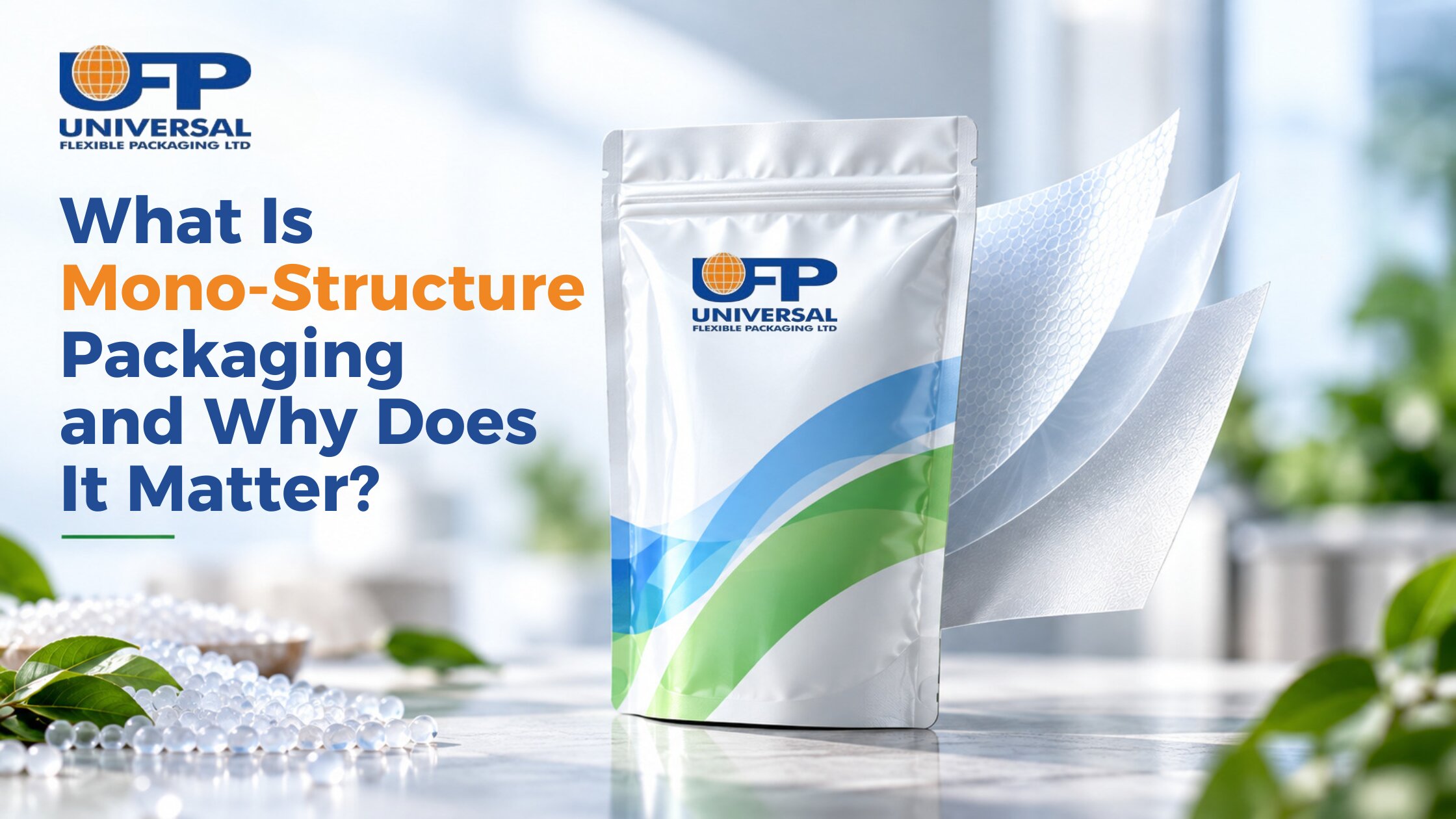
Packaging materials are evolving as businesses look for solutions that balance product protection, performance and sustainability.
One packaging approach businesses consider is mono-structure packaging. This approach uses a single material structure rather than combining multiple materials, with the aim of creating packaging structures that can support recycling where suitable systems are available.
However, choosing a packaging structure involves more than looking at sustainability alone.
Businesses also need to consider how the packaging performs during production, how well it protects the product and whether it meets the requirements of the application.
Mono-structure packaging is made from a single material structure rather than multiple layers of different materials. A potential benefit is that using fewer material types can support recycling processes where suitable infrastructure exists. The right packaging choice depends on balancing sustainability considerations with product protection, production requirements and overall performance.
What is mono-structure packaging?
Traditional flexible packaging can use multiple material layers combined together to achieve different performance characteristics.
Each layer can provide a different function, such as strength, barrier protection or sealing performance.
Mono-structure packaging uses a single material type or simplified material structure intended to balance product performance with sustainability considerations.
The exact structure depends on the product requirements and the level of protection needed.
Why are businesses considering mono-structure packaging?
Businesses considering packaging changes need to understand how different material structures affect performance and end-of-life options.
Mono-structure packaging can be considered because a simplified material structure may support recycling processes where suitable infrastructure exists.
However, sustainability decisions need to consider the full packaging lifecycle.
Important factors include:
- Product protection
- Shelf life requirements
- Production performance
- Available recycling infrastructure
- Consumer disposal systems
The most suitable option depends on the product requirements, packaging performance and available end-of-life systems.
What should brands consider before changing packaging structures?
Changing packaging materials requires careful consideration.
A material that works well for one product may not be suitable for another.
Brands should consider:
- Whether the packaging maintains the required barrier performance
- Whether it runs effectively through existing production processes
- Whether the material structure suits the product
- Whether recycling systems are available for the chosen solution
Moving towards more sustainable packaging requires finding the right balance between environmental goals and practical performance.
How does UFP support sustainable packaging solutions?
At UFP, recyclable flexible packaging is part of the sustainable packaging solutions we provide.
UFP provides packaging options that balance sustainability considerations with product protection, print quality and production requirements.
UFP works with recyclable flexible film options as part of its sustainable packaging offering.
Ready to discuss your sustainable packaging requirements?